
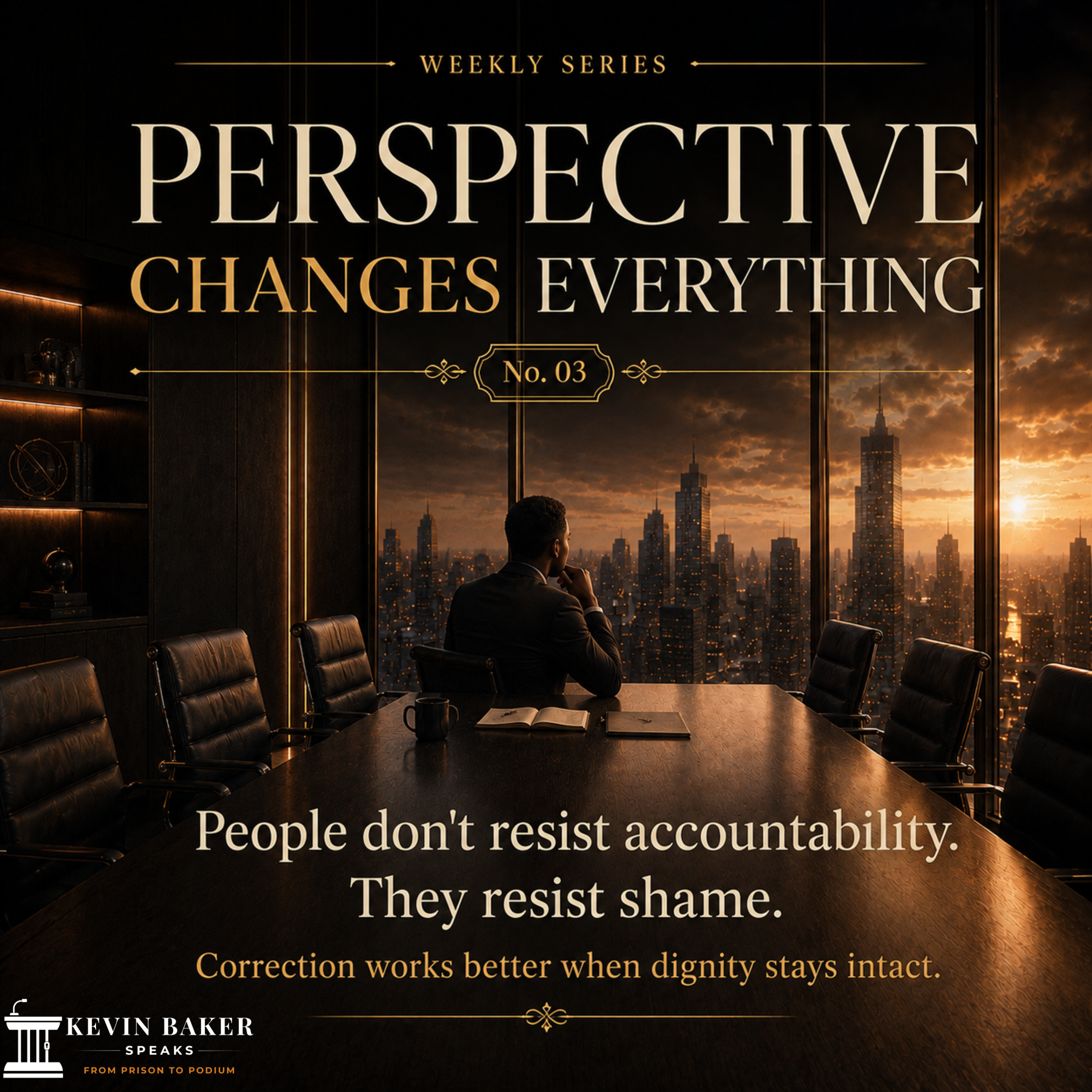
Sometimes they resist what accountability feels like.
When feedback lands as judgment, embarrassment or threat, people become defensive.
They explain.
They protect themselves.
They shut down.
They stop listening.
And once that happens, the conversation stops being about improvement.
It becomes about survival.
Strong accountability is different.
It is clear.
It is direct.
It does not avoid responsibility.
But it also preserves dignity.
Because the goal is not to make someone feel small.
The goal is to help them see clearly, take ownership and move forward.
The better question is not only: “Did I hold them accountable?”
It is also: “Did I make it possible for them to hear me?”
